OEMs face increasing pressure to deliver products that are reliable, cost-efficient, and long-lasting. Traditional Brushed DC (BDC) motors, while simple, present significant challenges: frequent maintenance, limited lifespan (typically 1,000–3,000 hours), and inconsistent performance under demanding conditions.
Brushless DC (BLDC) motors offer a compelling alternative. With operational lifetimes often exceeding tens of thousands of hours, higher efficiency, and precise control, BLDC technology reduces maintenance needs, lowers total operating costs, and minimizes operational risks.
This guide presents an 8-step OEM roadmap for a smooth migration from BDC to BLDC motors, helping manufacturers optimize product performance and lifecycle value.
Key Takeaways
BLDC motors deliver over 90 percent efficiency and consistent torque output, effectively addressing the performance limitations of traditional brushed DC motors while supporting wide-voltage operation from 5V to 400V.
With operational lifetimes reaching tens of thousands of hours, BLDC solutions significantly reduce maintenance frequency and unplanned downtime, helping OEMs achieve lower total cost of ownership across product life cycles.
From rapid prototyping within 15 days to scalable manufacturing and UL/CE certification compliance, the eight-step BLDC upgrade roadmap ensures smooth integration for OEM applications and stable global supply chain support.
Value Proposition of BLDC Migration
BLDC Migration: Value and Total Cost of Ownership
Total Cost of Ownership (TCO) goes far beyond the initial purchase price of a motor. For OEMs, TCO includes energy consumption, maintenance frequency, replacement parts, and unplanned downtime. By adopting BLDC motors, manufacturers can achieve significant savings over the life of their products. High operational efficiency—often exceeding 90 percent—combined with extended service life of tens of thousands of hours reduces maintenance needs and energy use, making BLDC solutions financially advantageous compared to traditional brushed DC motors.
BLDC motors also provide smoother, quieter operation and precise torque control, which is essential for applications demanding high reliability and accuracy, such as robotics, medical devices, and noise-sensitive equipment. These operational advantages directly contribute to lower TCO and improved customer satisfaction.
Mitigating Operational and Market Risks
Brushed DC motors present several operational challenges, including frequent brush wear, sparking, and increased maintenance requirements. Such issues can lead to unexpected downtime, additional repair costs, and potential disruptions in production schedules.
BLDC motors address these challenges by eliminating brushes, significantly reducing maintenance frequency and the risk of operational failures. This improved reliability not only minimizes operational risks but also enhances product performance, helping OEMs deliver more consistent and high-quality solutions to their customers. Moreover, adopting BLDC technology allows manufacturers to meet evolving energy regulations and market expectations, further strengthening competitive positioning.
The Practical Roadmap: 8 Steps to BLDC Migration
Transitioning from brushed DC motors to BLDC technology requires careful planning and a structured approach. This eight-step OEM roadmap provides a clear framework for evaluating, selecting, and integrating BLDC motors, helping manufacturers reduce total cost of ownership, minimize operational risks, and enhance product performance.
Step 1: System Assessment and Gap Analysis
Evaluate the existing system, focusing on brushed DC motor performance and limitations. Identify efficiency bottlenecks, maintenance frequency, energy usage, and common failure points. For example, frequent brush replacements or maintenance interruptions highlight areas where BLDC motors can provide significant improvement. Use Honest’s lifespan and maintenance data to benchmark potential gains.
Step 2: Defining Specifications and Targets
Set clear performance goals, including voltage, power, torque, speed, duty cycle, and thermal requirements. Decide between sensored and sensorless BLDC configurations based on precision and low-speed performance needs. For instance, sensored BLDC motors are ideal for high-precision applications such as robotic arms or medical devices, while sensorless motors can meet the needs of outdoor tools like electric lawnmowers or chainsaws. Honest supports DC 5–400V and AC 100–600V ranges with power from 3W to 5000W, providing flexibility for diverse OEM applications.
Step 3: Component Selection and Matching
Select the BLDC motor, controller, and any required sensors. Match motor power and physical dimensions to product constraints, and verify controller compatibility. Honest offers motor core diameters from 20mm to 260mm and supports non-standard mounting configurations.
Example: selecting a motor that fits an existing OEM housing while maintaining required torque output, and integrating optional controllers or gearboxes for optimized performance.
Step 4: Prototyping and Benchmark Testing
Develop prototypes and conduct benchmark testing under realistic operating conditions. Compare noise levels, temperature rise, torque response, and overall performance against the previous brushed DC system. Honest can provide BLDC prototypes within 15 days, allowing OEMs to validate designs efficiently. This early testing ensures control algorithms, thermal management, and mechanical integration are optimized before full-scale production.
Step 5: System Integration and Adaptation
Integrate the BLDC motor and control system into the product. Adjust mechanical mounts, housings, airflow channels, or cooling solutions as necessary. Honest’s solutions support IP55–IP66 protection levels and can accommodate customized motor housings for outdoor or industrial applications.
Example: modifying airflow in a high-speed tool to maintain optimal temperature and prevent thermal issues.
Step 6: Software and Control Tuning
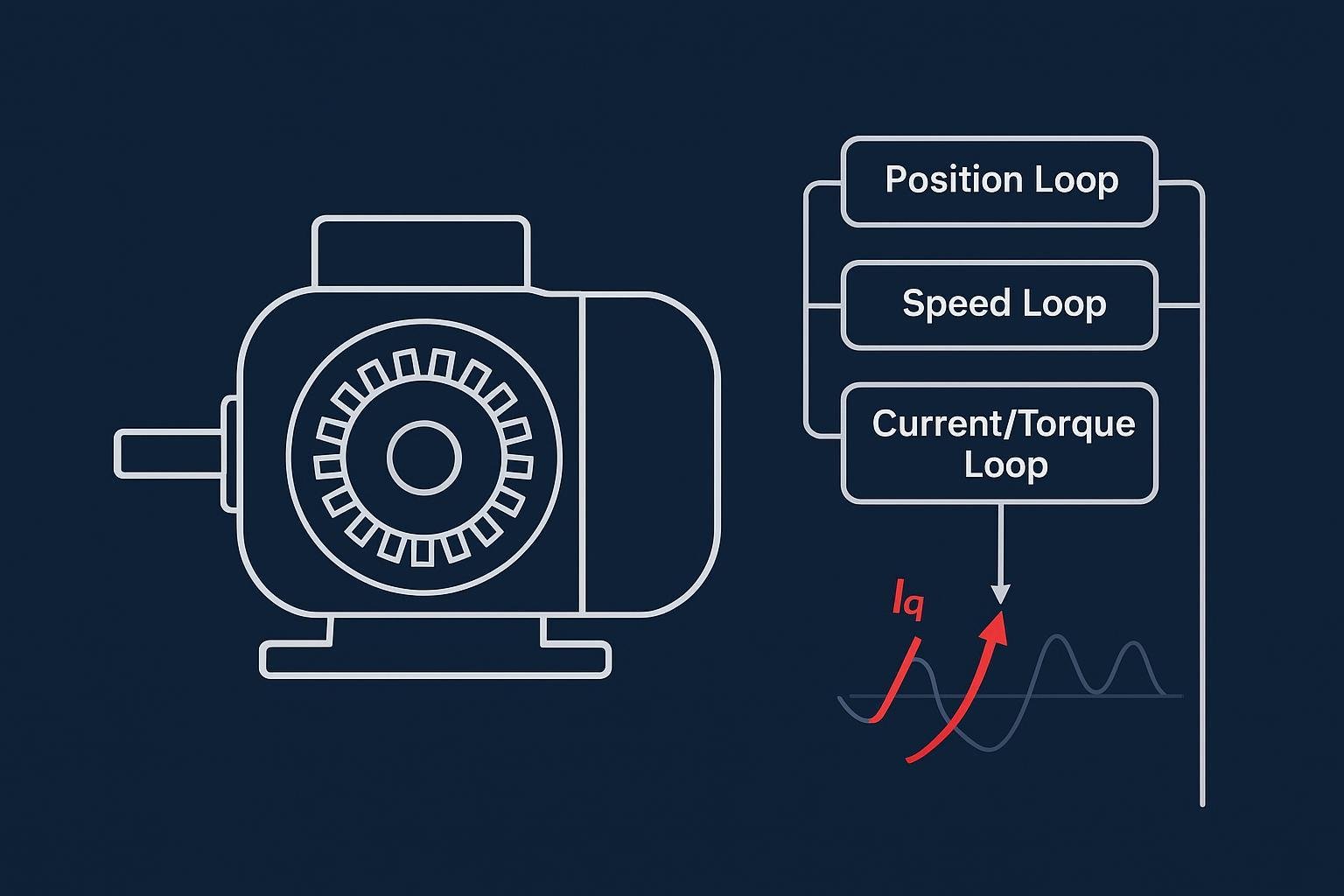
Fine-tune motor control algorithms for optimal speed, torque, and dynamic response. Honest’s BLDC motors support FOC (Field-Oriented Control) for precise torque management and smooth operation, even under high-load or rapid start/stop conditions. This tuning ensures reliable performance, efficient energy use, and accurate control for various applications, from power tools to automated machinery.
Step 7: Validation, Certification, and Compliance
Conduct thorough testing to verify motor reliability, safety, and performance. Honest motors comply with CE, UL, RoHS, REACH, ISO 9001, IATF16949, and, for automotive applications, AEC-Q100 standards. OEMs can validate product lifespans, thermal behavior, noise levels, and load characteristics using Honest’s certified testing procedures. This step mitigates certification risks and facilitates faster market entry.
Step 8: Pilot Production and Supply Chain Readiness
Begin small-scale production to validate manufacturing processes, quality consistency, and supply chain reliability. Check component availability, lead times, and logistics processes. Honest’s minimum order quantity is 500 units, with flexible international shipping options (FOB, CIF, DAP) and support for multiple ports. This step ensures OEMs are ready for large-scale deployment while maintaining reliable global supply chain operations.
Effective Migration Strategies

Transitioning to BLDC technology presents some challenges, but these can be mitigated with well-planned strategies. Honest provides a comprehensive approach to help OEMs adopt BLDC motors efficiently while minimizing risks and upfront costs.
Financial Strategy
While the initial purchase cost of BLDC motors may be higher than traditional brushed DC motors, Honest’s solutions significantly reduce total cost of ownership (TCO) over the product lifecycle. Higher efficiency, longer operational life, and lower maintenance requirements lead to reduced energy consumption and fewer unplanned repairs. OEMs can also leverage government incentives and subsidies for energy-saving motors. For instance, programs in North America, such as the U.S. IRA and Canadian energy-efficiency initiatives, can help offset initial investment costs.
An OEM upgrading an electric lawnmower from a brushed DC motor to an Honest BLDC solution, for example, can benefit from reduced maintenance downtime and lower energy usage, illustrating how BLDC migration delivers tangible operational and financial advantages.
Engineering Management
These financial and operational considerations highlight the importance of careful engineering planning for successful BLDC migration. Complex designs and non-standard applications require detailed technical support. Honest provides one-on-one guidance, assisting OEMs with custom BLDC motor design, integration of control electronics, and optional gearbox or transmission modules. Rapid prototyping is available within 15 days, enabling OEMs to test performance and compatibility before scaling up production.
For example, an OEM developing a high-speed electric chainsaw can use Honest’s prototype motors to evaluate torque, speed, and thermal performance, ensuring proper fit and operational reliability before mass production.
Operational Security
BLDC motors inherently reduce operational risks by eliminating brush wear, sparks, and related motor failures, leading to fewer unplanned stoppages, lower maintenance requirements, and improved product reliability. Honest ensures consistent operational security through verified component sourcing, flexible manufacturing capabilities, and robust support for international shipping, including FOB, CIF, and DAP terms.
For instance, OEMs producing outdoor power equipment for multiple regions can leverage Honest’s logistics network to receive motors, controllers, and optional gearboxes from Shanghai or Ho Chi Minh ports. This approach ensures stable supply and timely delivery, supporting uninterrupted production and consistent end-product performance.
By combining reliable BLDC technology with a dependable supply chain, OEMs can minimize operational and market risks while maintaining consistent quality across global markets. This aligns seamlessly with a structured, methodical BLDC migration approach and sets the stage for consulting Honest’s engineering team for project-specific guidance.
For OEMs considering a transition to BLDC technology, a structured, methodical approach is essential to ensure optimal performance, reliability, and cost efficiency. Honest’s engineering team offers tailored technical support throughout the entire process—from system assessment and custom motor specification to prototyping, integration, and compliance validation. By leveraging our expertise and extensive product portfolio, OEMs can confidently implement BLDC solutions for applications ranging from outdoor power equipment to robotics and medical devices. For detailed guidance or project-specific consultation, our technical specialists are available to provide one-on-one support.
FAQ
How does BLDC migration reduce Total Cost of Ownership (TCO)?
BLDC motors use less energy. They work better. This saves money. They last longer too. So you fix them less. You buy fewer new ones. This makes your total costs much lower.
What are the key performance benefits of BLDC motors?
BLDC motors give you better control. They work very well. They last a long time. They also run quietly. They do not get too hot. These things make your product better. They make it more reliable.
Can Honest customize BLDC motors for specific OEM needs?
Yes, Honest can change BLDC motors. They make them just for you. You get help from an engineer. Honest has an 8-step plan. This plan makes sure your special motor is perfect.
What certifications do Honest’s BLDC motors hold?
Honest’s motors meet world rules. These include CE, UL, RoHS, REACH. They also include ISO 9001. And IATF16949. These help you sell your product faster.