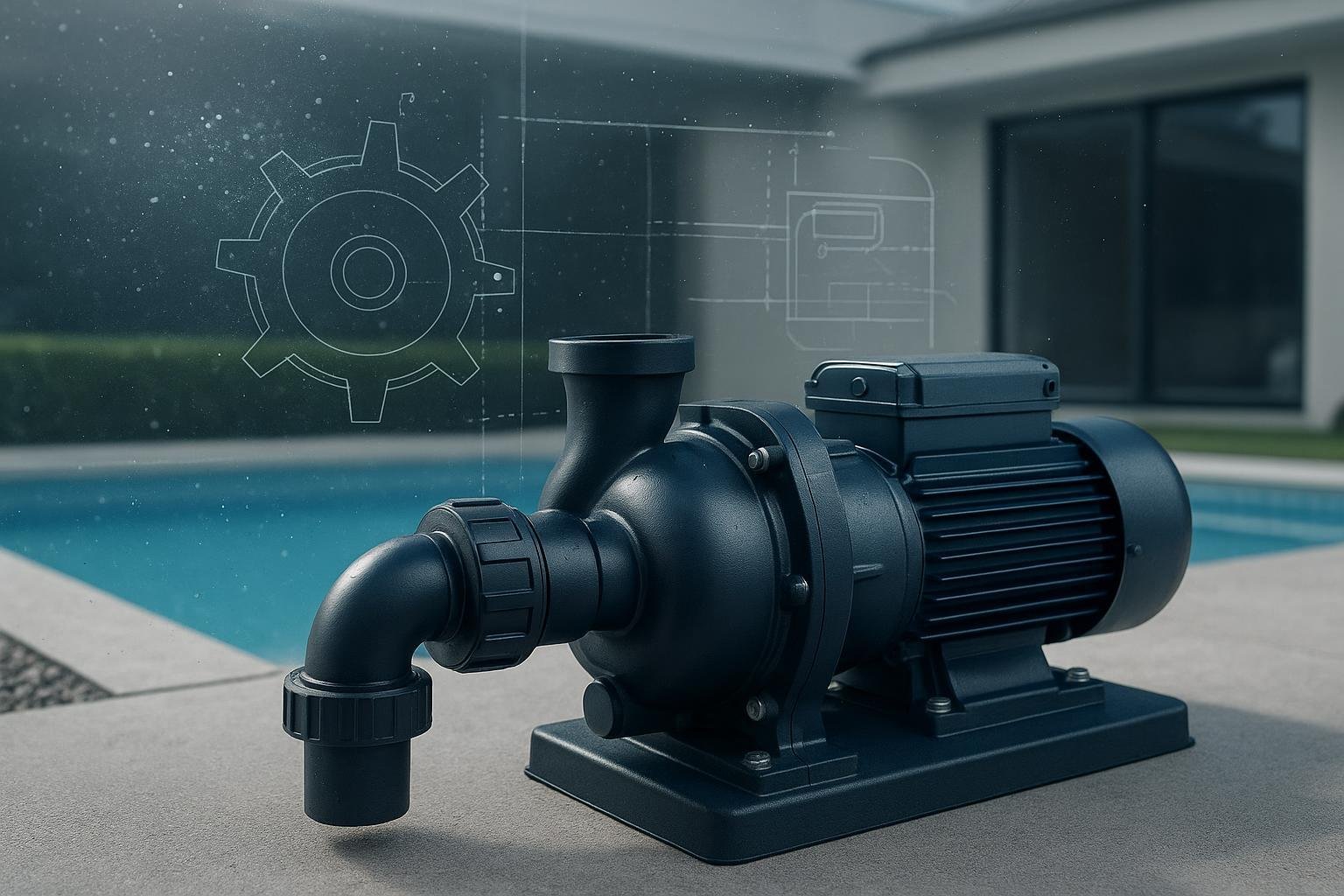
The motor is the critical component that dictates a pressure washer’s operational efficiency, cleaning power, and long-term reliability in demanding outdoor environments. With the pressure washer market maintaining strong momentum and having reached the $2.24 billion valuation in 2025, Original Equipment Manufacturers (OEMs) face increasing pressure to deliver robust and high-performing equipment.
Standard, off-the-shelf motors often present a bottleneck, failing to provide the precise power and thermal management required for continuous high-pressure applications. A custom-engineered motor solution is essential for achieving system integration, maximizing pump life, and providing the consistent, high-precision pressure control necessary for commercial and specialized cleaning tasks. This guide outlines the technical specifications and advanced technologies OEMs must consider to ensure peak performance and minimize total system cost.
Key Takeaways
Custom Design Optimizes Integration: Tailoring motor specifications (frame, shaft, thermal class) directly to the pump and chassis significantly enhances system lifespan and power density.
BLDC and VFD Technologies are Key: Incorporating Brushless DC (BLDC) motors with Variable Frequency Drives (VFDs) delivers superior energy efficiency and allows for precise, dynamic pressure control.
Durability Requires Specific Protection: For outdoor use, select motors based on comprehensive ingress protection (IP Ratings) and corrosion resistance to withstand moisture and cleaning chemicals.
TCO is Dictated by Reliability: Prioritizing continuous duty cycles, high efficiency, and robust component protection is the primary strategy for minimizing long-term maintenance and warranty claims.
Why Custom Motor Integration Is Critical for OEM Performance
Precision Fit vs. Compromised Systems
Custom motors provide substantial benefits over standard off-the-shelf units. In demanding outdoor applications, standard motors are often poorly matched to the specific pump characteristics, leading to performance inefficiencies and premature failure.
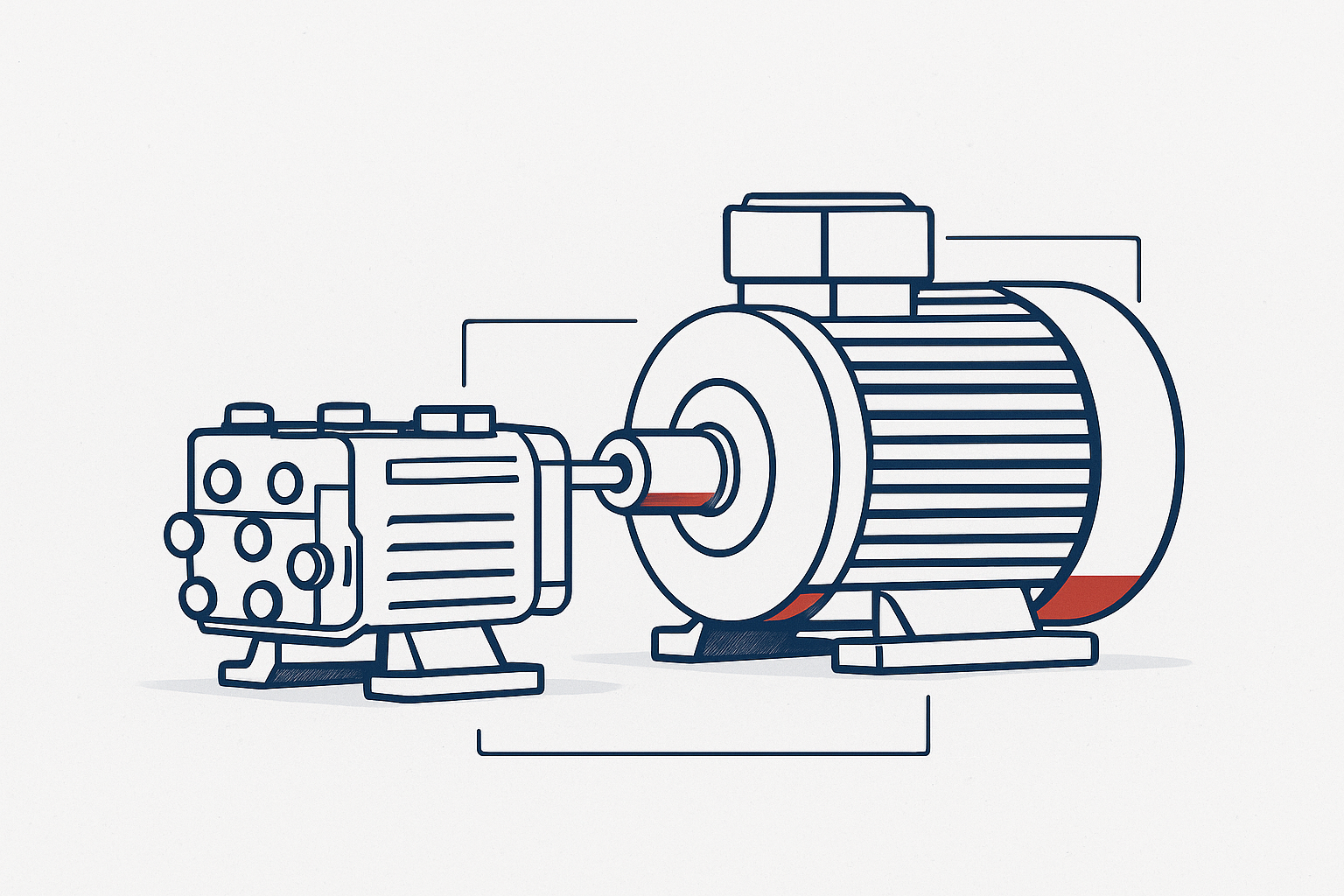
A custom-engineered motor solution ensures optimal integration by precisely matching the motor’s frame size, shaft dimensions, thermal class, and mounting interface directly to the high-pressure pump and chassis design. This precision alignment minimizes mechanical stress, vibration, and thermal loading, which are common causes of damage in seals, bearings, and couplings. This results in maximum power density and a significantly extended system lifespan, thereby lowering warranty claims.
The Direct Link Between Motor Torque, Flow, and Pressure
The motor acts as the prime mover, directly regulating the pump’s performance characteristics—specifically volumetric flow rate (GPM) and system pressure (PSI).
High-pressure pumping is a high-torque application. A motor that is incorrectly sized will operate inefficiently under load.
Undersized Motor: Leads to operation outside the motor’s optimal efficiency range, resulting in excessive heat generation, thermal overload shutdown, and rapid insulation degradation.
Oversized Motor: Increases material cost, physical size, and operating weight unnecessarily.
Custom motor engineering provides a precise torque-speed curve necessary to drive the pump at its peak efficiency point across the required operating range. This ensures stable and continuous pressure output even during challenging duty cycles, preventing the pressure fluctuations and motor overheating that compromise cleaning efficacy and system durability.
Key Motor Specifications for OEM High-Pressure Washer Design
Selecting the optimal motor requires a precise match between the motor’s electrical and mechanical specifications and the high-pressure pump’s operational demands. For custom OEM solutions, these six parameters are non-negotiable.
Power Output (kW) and Torque Curve Matching
The motor’s power rating determines its capacity to deliver the required continuous operating torque needed by the pump to sustain flow (GPM) against system pressure (PSI). Instead of relying on generalized estimation formulas, OEMs must utilize precise engineering calculations based on pump efficiency and electrical input/output.
Critical OEM Considerations:
System Efficiency: Total required input power (P-Input) must account for pump efficiency (Efficiency-Pump), transmission efficiency (Efficiency-Trans), and the motor’s operating efficiency (Efficiency-Motor).
Operating Margin: We recommend sizing the motor to handle the pump’s maximum required power output plus a 15-20% margin to manage transient pressure spikes and thermal fluctuations without tripping overload protection.
Electric Motor Sizing (kW): For electric models, focus on the Continuous Operating Power (COP) in kilowatts (kW) rather than anecdotal HP conversions, ensuring it meets the duty cycle requirements of the industrial application (e.g., 5.5kW for a mid-range commercial unit).
Revolutions Per Minute (RPM) and Drive System
The motor’s synchronous RPM is directly linked to pump longevity and system efficiency. The selection of the drive system (Direct, Belt, or Gear) dictates the required motor speed and the resulting mechanical stress on pump components.
Drive System Characteristics & OEM Implications:
Pump Type | RPM Range | Thermal/Wear Impact | OEM Design Priority |
Direct Drive | 3000-3600 RPM | Higher operating temperature, faster wear on seals and bearings. | Requires higher thermal class motor (Class F or H) and precision balancing; ideal for compact design. |
Belt or Gear Drive | 1100-1600 RPM | Lower stress and operating temperature; extended component life. | Focus on high torque at low speed and optimized motor inertia for smooth transmission and minimized belt/gear wear. |
Lower RPM operation (via belt or gear drive) significantly reduces the frequency of stress cycles on critical pump components, such as seals and bearings, thereby directly extending the pump’s operational lifespan and reducing maintenance costs.
For low-RPM systems, a custom motor can be designed to deliver peak efficiency precisely at the required input speed (e.g., 1450 RPM or 1750 RPM), avoiding reliance on standard off-the-shelf units that may operate far from their optimal efficiency point under load. This precise speed matching is critical for maximizing energy efficiency and minimizing mechanical wear across the entire drive train.
Voltage, Phase, and Thermal Class
For OEM design, optimizing the electrical system requires addressing compatibility, efficiency, and thermal protection simultaneously:
Compatibility and Efficiency: Commercial and industrial equipment generally requires compatibility with three-phase power supplies(230V,380V or 460V) for optimal power density and energy efficiency. Residential units typically rely on 115V or 230V single-phase, which limits the maximum achievable output power.
Thermal Class (Insulation): This is a critical factor for TCO and motor longevity. Due to the high-load, often enclosed mounting environment of pressure washer pumps, the motor must be specified with Class F or, ideally, Class H insulation. This higher thermal rating permits higher safe operating temperatures, ensuring the winding insulation does not degrade prematurely from internal heat rise or high ambient temperatures, thus directly preventing motor failure and lowering warranty risk.
Ingress Protection (IP Rating) and Chemical Resistance
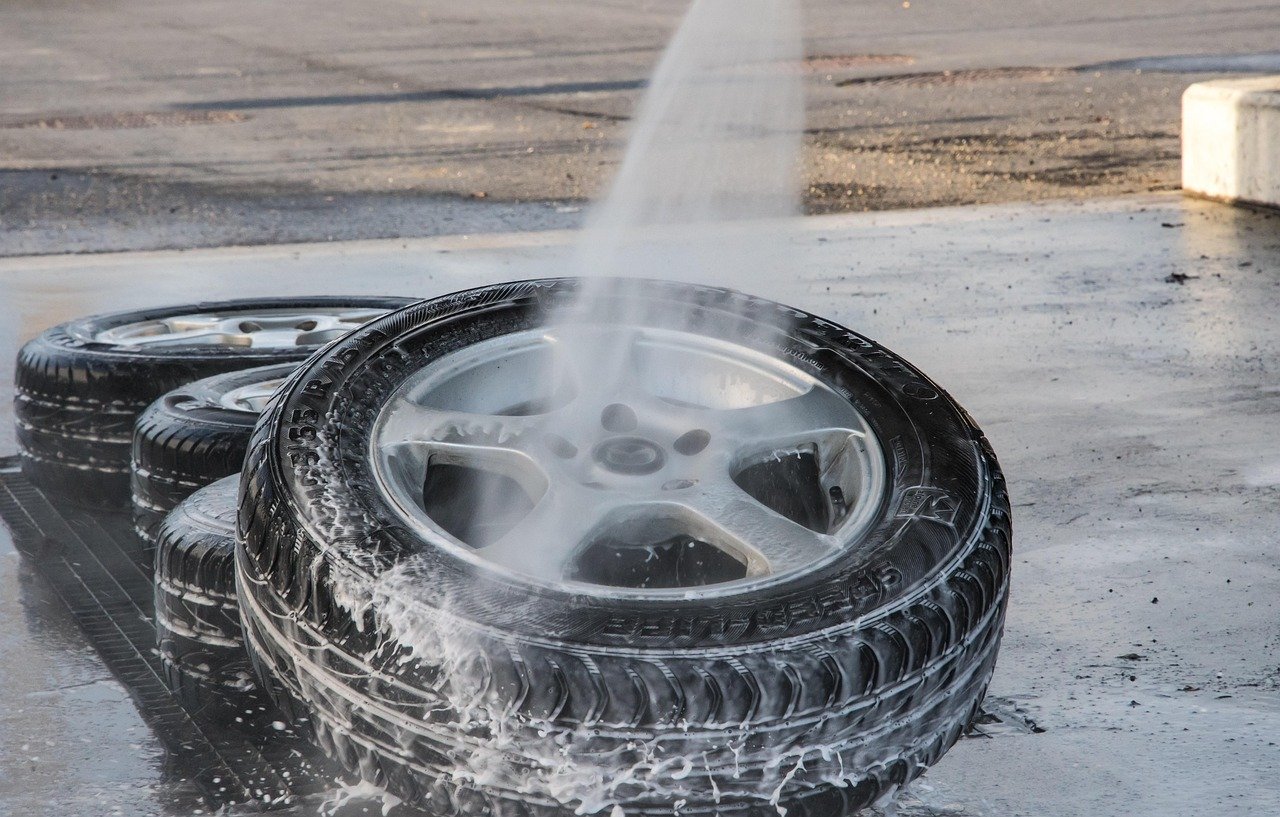
The motor enclosure must withstand continuous exposure to high-pressure water, humidity, and cleaning chemicals—the hallmarks of an outdoor pressure washer environment.
For OEM design, the focus must extend beyond standard water protection to material durability:
Water Protection | Protection Against | Critical OEM Note |
IPx5 | Water jets | Suitable for general splash and light cleaning. |
IPx6 | Powerful water jets | Minimum recommended standard for commercial outdoor pressure washers due to heavy spray. |
IPx9/IPx9K | High-pressure, high-temp jets | Recommended for food processing, sanitation, and heavy industrial cleaning where steam or caustic chemicals are used. Requires specialized seals and non-corrosive materials. |
Beyond the IP rating, OEMs must specify motor materials (e.g., specialized paints, stainless steel shafts, and high-grade polymer seals) that are chemically resistant to common cleaning detergents (acids, alkalis). Failure to account for chemical exposure will lead to seal degradation, subsequent water ingress, and premature motor failure, regardless of the initial IP rating. This focus on material science directly contributes to TCO reduction by extending component life.
Frame Size, Mounting, and Shaft Interface
Physical integration is paramount for minimizing vibration and maximizing the lifespan of the pump and motor bearings.
Precision Fit: While standardized sizes (e.g., NEMA 56C flange) are common starting points, customization allows for micro-adjustments in shaft diameter tolerance, keyway dimension, and mounting hole alignment. This precision eliminates the need for bulky or expensive adapter plates, simplifying assembly and reducing overall footprint.
Critical Alignment: Customization ensures the motor shaft diameter (e.g., 28 mm or 1-1/8 inch) is perfectly matched to the pump input, which is essential for reducing runout and mitigating the mechanical forces that cause premature seal and bearing failure.
Duty Cycle: Continuous Operation for Longevity
The duty cycle defines the motor’s ability to maintain its rated performance without overheating, directly impacting TCO and warranty risk.
Continuous Duty (S1): This is the required standard for commercial, industrial, or professional-grade pressure washers designed for prolonged use (e.g., car washes, farming equipment). S1 motors are thermally designed to run indefinitely at their rated load, handling constant work and heat without compromising insulation integrity.
Intermittent Duty (S2/S3): These motors are only suitable for low-cost residential models intended for short bursts of use followed by cooling periods. Using an S2/S3 motor in a continuous application will inevitably lead to thermal overload, rapid insulation breakdown, and high warranty costs.
OEM Customization Focus: Specifying the motor’s thermal design for an S1 rating, even under high ambient outdoor temperatures, is the most effective way to ensure product reliability and maximize the lifespan of the entire pressure washer system.
Advanced Motor and Control Technologies
The next generation of high-pressure washers will rely on integrating advanced motor and control systems to meet high-efficiency and precise control demands.
BLDC Motors: The OEM Standard for Efficiency
BLDC motors are quickly becoming the standard for commercial and industrial pressure washers, offering significant advantages over traditional brushed DC or AC induction motors. Their key benefit lies in the elimination of mechanical brushes, which are the primary wear component, resulting in an operational lifespan often exceeding 20,000 hours, or even over 50,000 hours.
OEM Advantages of BLDC:
High Power Density: BLDC designs allow OEMs to achieve a higher power output in a smaller, lighter footprint.
Superior Efficiency: Their electronic commutation drastically reduces energy loss, leading to lower operating temperatures and lower energy consumption—a direct reduction in the user’s TCO.
Low Noise Profile: The absence of mechanical friction ensures quieter operation (e.g., 45 dB to 50 dB range), a key selling point in noise-sensitive environments.
VFDs: Precision and System Protection
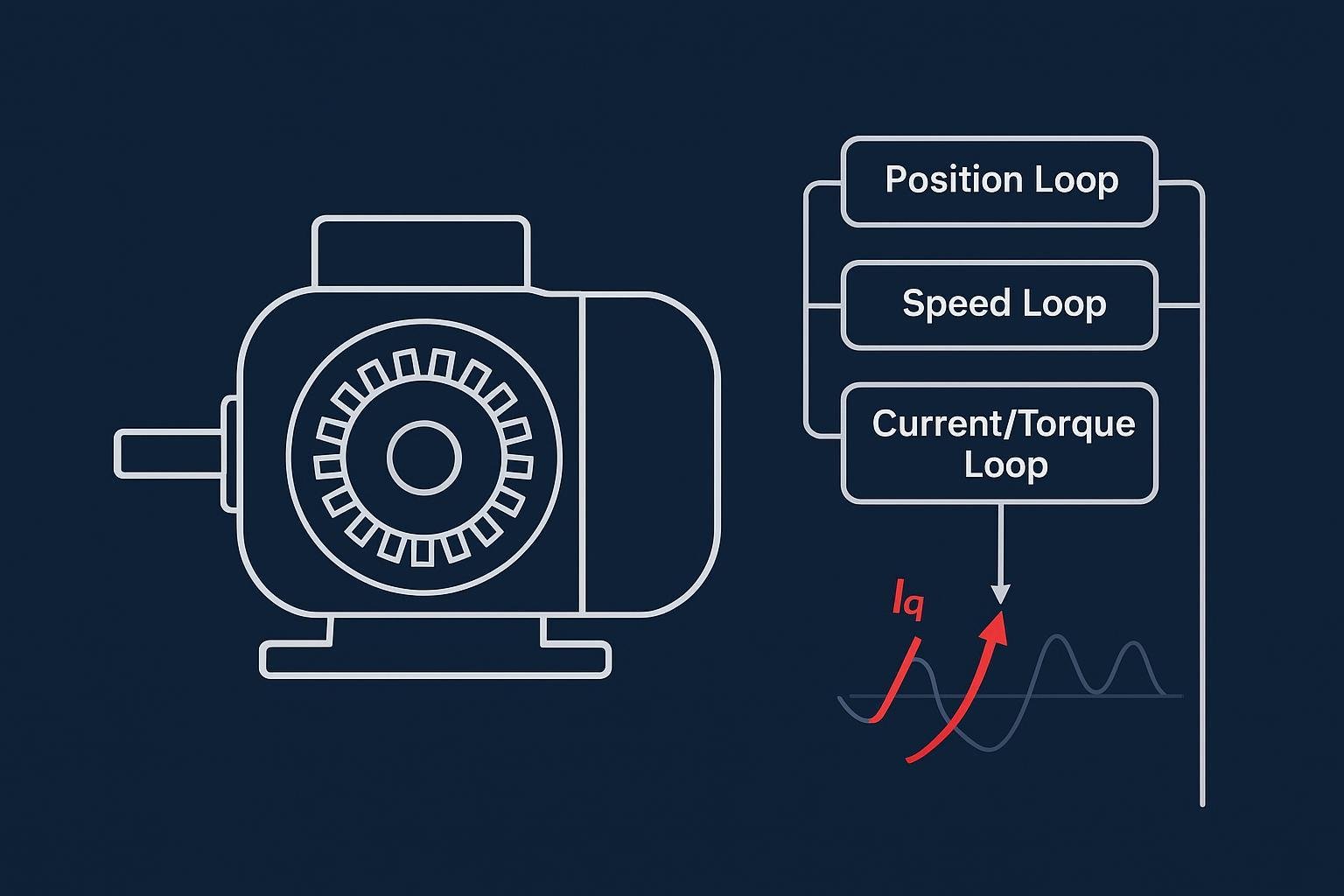
VFDs (also known as VSDs) are essential components when utilizing BLDC or AC induction motors for high-pressure washing. They provide dynamic control over motor frequency and voltage, translating directly into highly accurate speed and pressure regulation.
Dynamic Pressure Control: VFDs allow the motor speed to be matched precisely to the cleaning task, achieving the exact pressure (PSI) and flow (GPM) required, which conserves water and prevents energy waste.
Energy Efficiency: Because pump power demand is non-linear (i.e., 20% reduction in speed can cut energy consumption by up to 50% in variable torque applications), VFDs are crucial for realizing significant long-term energy savings.
Soft Start and Component Protection: VFDs enable soft starting, reducing the initial current draw and minimizing mechanical shock on the motor, pump, and electrical infrastructure. This smoother operation extends the lifespan of the pump seals and bearings.
Smart Motors and IoT Integration: Predictive Maintenance
Integrating IoT capabilities transforms a standard motor into a smart motor capable of predictive maintenance.
Sensors embedded within the motor and VFD collect operational data (vibration, temperature, current draw). This data is analyzed to detect anomalies and predict component failure before it occurs. For OEMs, this capability translates directly into:
Reduced Downtime: Identifying and scheduling maintenance (e.g., replacing a seal or bearing) during off-peak hours instead of facing catastrophic field failure.
Optimized Warranties: Data logs provide transparency for troubleshooting and validating warranty claims, distinguishing between manufacturing defects and operational misuse.
Application-Specific Design Segmentation
Successful OEM product line management requires the motor and drive system to be perfectly tailored to the intended user segmentation.
Residential vs. Commercial Duty Cycles
The divergence in usage profile between residential and commercial units dictates fundamentally different motor specifications.
Feature | Residential (Intermittent) | Commercial/Industrial (Continuous) | OEM Specification Impact |
PSI Range | Typically1300-2000 PSI. | Ranges from2000-4000+ PSI. | Power Density & Torque: Requires robust motor frames and higher power ratings. |
Durability | 100-300 hours of operation. | 1000-5000+ hours of operation. | Thermal Class: Requires S1 Continuous Duty and Class H insulation to handle prolonged use. |
Pump Type | Axial cam pumps. | Triplex plunger pumps. | RPM/Inertia Matching: Requires precise RPM and torque curve tuning for pump type. |
Operational and Environmental Constraints
Beyond power, OEMs must factor in the motor’s operating environment and water supply demands:
Water Source Dependence: If the pressure washer must draw water from a tank or non-pressurized source (suction lift), the motor system must deliver the necessary low-pressure torque to facilitate priming and continuous self-suction, adding complexity to the VFD tuning requirements.
Ambient Conditions: High temperature, excessive humidity, and exposure to corrosive air quality necessitate specifying motor components with superior IP ratings (e.g., IP66/IP69K), specialized corrosion-resistant coatings, and seals that can manage thermal cycling without cracking.
Partnering for Precision: The Customization Process
Successful custom motor development begins with a comprehensive technical dialogue focused on integrating the motor perfectly into the OEM’s system.
Defining Your Technical Requirements
A comprehensive technical dialogue ensures the custom motor meets the precise performance and integration demands of the high-pressure washer system:
Operating Profile: Define continuous power (S1) or intermittent duty cycle (S2/S3), peak torque requirements, target speed (RPM), and the operating voltage/phase.
Environmental Hardening: Specify required Ingress Protection (IP) rating, thermal class (F or H), and necessary chemical/corrosion resistance for motor materials.
Mechanical Integration: Finalize frame size, mounting flange (e.g., NEMA C-Face), precise shaft dimensions (diameter, keyway tolerance), and cable exit specifications.
Control System: Confirm integration points for VFD/VSD, smart motor sensors (IoT), and required connectors.
Honest’s engineering team provides specialized expertise, offering flexible customization of motor envelope dimensions from 20 mm up to 260 mm to achieve optimal power density for the OEM’s design envelope.
Accelerated Engineering and Manufacturing Milestones
The custom motor project, guided by Honest’s engineering team, follows a controlled engineering-to-production pathway focused on efficiency and rigorous quality gates:
1. Requirements Definition: Formalizing all key specifications (Power, RPM, IP, Thermal Class).
2. CAD and Simulation: Generating precise drawings and performance simulations to confirm design parameters.
3. Rapid Prototyping and Validation: Accelerated production of samples (e.g., within 15 days), followed by rigorous testing under specified load and environmental conditions (e.g., thermal chamber, high-pressure jet).
4. OEM Approval & Production Start: Final quality inspection and ramp-up to mass production.
5. Final Quality & Compliance Inspection: Comprehensive testing of every unit for performance metrics and regulatory adherence.
Quality Assurance and Long-Term Partnership
Minimizing TCO requires an assured commitment to motor quality and supply chain stability.
Certifications and Compliance: Products adhere to global standards, including CE, UL, RoHS, and REACH, while Honest’s manufacturing process is certified under ISO 9001 and IATF 16949.
Product Reliability and Warranty: Custom pump motors are manufactured to handle a wide range of industrial power (0.75 kW to 7500 kW) and operate across standard voltages (115V,230V,380V). The Honest partnership includes a 2-year product warranty and a guaranteed engineering response time of under 12 hours.
Global Logistics and Risk Mitigation: Offering flexible shipping terms (FOB, CIF, DAP) and established partnerships with global shippers ensures timely delivery and robust supply chain risk management.
The performance, lifespan, and Total Cost of Ownership (TCO) of your high-pressure washer are directly determined by the motor’s engineering. Compromising on a generic component inevitably leads to thermal failure, vibration damage, and costly warranty claims.
The Custom Motor delivers three non-negotiable advantages for OEMs:
Guaranteed Reliability: Precision matching (torque, shaft alignment) and advanced hardening (Class H insulation, chemical resistance) prevent the root causes of pump failure.
Optimized TCO: Adopting S1 Continuous Duty and VFD-ready BLDC technology ensures maximum energy efficiency and an operational lifespan exceeding industry standards.
Perfect Integration: Custom sizing eliminates costly adapter plates and simplifies assembly, enhancing overall product quality and market competitiveness.
Ready to integrate an optimized motor? Contact our specialized engineering solutions team to define your project requirements.
FAQ
What are the TCO benefits of an S1 Continuous Duty motor?
The S1 (Continuous Duty) rating prevents thermal failure and winding insulation breakdown, which are common causes of high warranty claims. By maximizing the motor’s operational lifespan (e.g., 1000-5000+ hours), the OEM significantly reduces the customer’s Total Cost of Ownership (TCO).
Why is Thermal Class H critical for long-term reliability?
Class H insulation permits higher safe operating temperatures in high-load, enclosed pump environments. This prevents premature insulation degradation, directly ensuring the motor meets continuous, reliable operation demands.
What is the recommended IP rating, and why is Chemical Compatibility essential?
IPx6 is the minimum standard for commercial use, with IPx9/IPx9K recommended for steam or caustic chemicals. Chemical compatibility (via specialized paints and seals) is essential because corrosive detergents will cause component failure regardless of the motor’s initial IP rating.
How do BLDC/VFD systems improve system efficiency and control?
BLDC motors offer superior efficiency and power density. When paired with a VFD, they enable dynamic pressure control matched precisely to the task, realizing non-linear energy savings and providing a soft start to protect pump components.
What assurances does the customization process provide?
Assurances include adherence to ISO 9001 and IATF 16949 certifications, a standard 2-year warranty, and a guaranteed engineering response time of under 12 hours. The process also offers accelerated prototyping (e.g., within 15 days) for rapid validation.